I build systems
from scratch,
then measure them.
Software engineer working on distributed consensus, low-latency C++, query execution, and compilers. I write the Raft log, the lock-free order book and the vectorized hash join myself. Each repo has a benchmark, a CI matrix, and a written record of what broke.
Systems I built from scratch
No frameworks doing the hard part. Each one has a design doc, a benchmark run on real hardware, and a list of what it deliberately does not do.
Latency ladder
Every measurement below comes from a benchmark committed in one of the repos above. They span eight orders of magnitude, so the axis is logarithmic. Each gridline is 10×.
Apple M2, 8 GB, Release builds. The machine was not isolated, so read throughput ratios as approximate. Counts such as skip rates are exact.
Bugs the tests didn't catch
The fastest way to judge an engineer is by what they found broken. Every repo keeps a record of these, and here are a few I learned the most from.
Research, ML & quant
Smaller projects and research. They're less about infrastructure and more about whether the conclusion holds up.
Where I've worked
Independent Quantitative Developer
- Built and operate a trading system on AWS EC2 across OANDA and Binance APIs, covering forex, crypto, commodities and indices.
- HMM regime detection, a feature-based signal engine, and fractional-Kelly sizing with automated per-strategy grading and risk limits.
Data Analytics & Automation Intern
- Automated ingestion of 10,000+ monthly transactions at 99.9% integrity with Python Flask microservices.
- Built anomaly-detection models that cut false positives from 40% to 12% while holding a 95% detection rate.
- Built ETL pipelines and Tableau dashboards that reduced time-to-insight by 60%.
Quantitative Risk & Valuation Intern
- Built a Monte Carlo framework (10K scenarios) for insurance portfolio risk over 2M+ policy records.
- Used survival analysis (Kaplan–Meier, Cox PH) to identify lapse drivers, which informed pricing adjustments.
- Wrote Python/SQL ETL pipelines that improved data-processing efficiency by 60%.
About
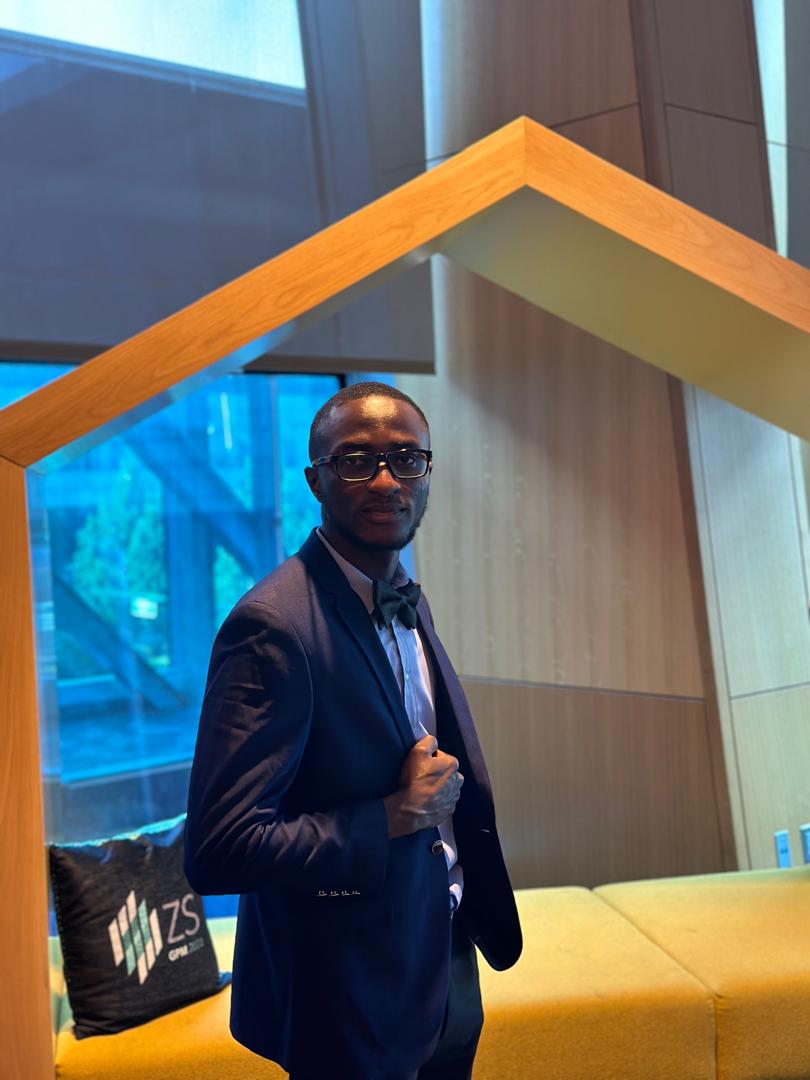
I'm a senior at Soka University of America studying Computer Science, Economics and Mathematics, and I'm completing the MIT MicroMasters in Statistics & Data Science alongside it.
I like problems where correctness is subtle and performance is measurable: a consensus log that has to survive a crash between two fsyncs, a feed handler that must recover a gap without inventing trades, a pass that must not fold away the baseline it is measured against. My math background (two Pi Mu Epsilon solutions, GRE Math Subject 910/990) shows up as a habit of stating what a system guarantees, and then testing that guarantee.
I was awarded a $25,000 research grant for a cybersecurity cluster at Bletchley Park, Royal Holloway, Bloomberg and the Bank of England.
languages
systems
ML & data
tooling
Optimised Support Vector Regression for California Housing Price Prediction
A replication-and-correction study of the role of feature engineering and hyperparameter tuning. It uses a 4-stage ablation and reports confidence intervals rather than a single score.
Repository →Published problem solutions
B.A. Computer Science, Economics & Mathematics
GRE 323 (Q165) · GRE Math Subject 910 / 990. Coursework includes stochastic calculus, real analysis, ML, data structures and econometrics. Dean's List, Merit Scholarship.
MicroMasters in Statistics & Data Science
Machine learning with Python, probability and statistical modeling, and time-series analysis.
Let's build something hard.
I'm looking for new-grad software engineering roles in infrastructure, distributed systems, low-latency trading and compilers. The fastest way to reach me is email.